


Red Granite Manufacturer in India: Choosing the Right Red Granite for Modern Projects
The status that red granite holds in the natural stones market is quite unique. Unlike white marble and grey limestone, red granite is not neutral; it has a story to tell. Its warmth, its rich colors, and its ability to attract attention are all deliberate design decisions, not a backdrop decision. This is precisely why red granite is used as entrance flooring, reception counter, dramatic staircase, and as an exterior facade when the stone is meant to stand out.
The variations that exist within the category are far greater than most buyers initially think. The Indian red granites can vary from the deep burgundy of Ruby Red, which is mined in Tamil Nadu, to the lighter, more colorful Imperial Red from Rajasthan to the distinct mineral colors of Multicolor Red.
They have unique personalities and unique uses. Considering them as being interchangeable just because they fall under the same umbrella of red is one sure way of ending up with stones that look great in samples but not so much as installations.
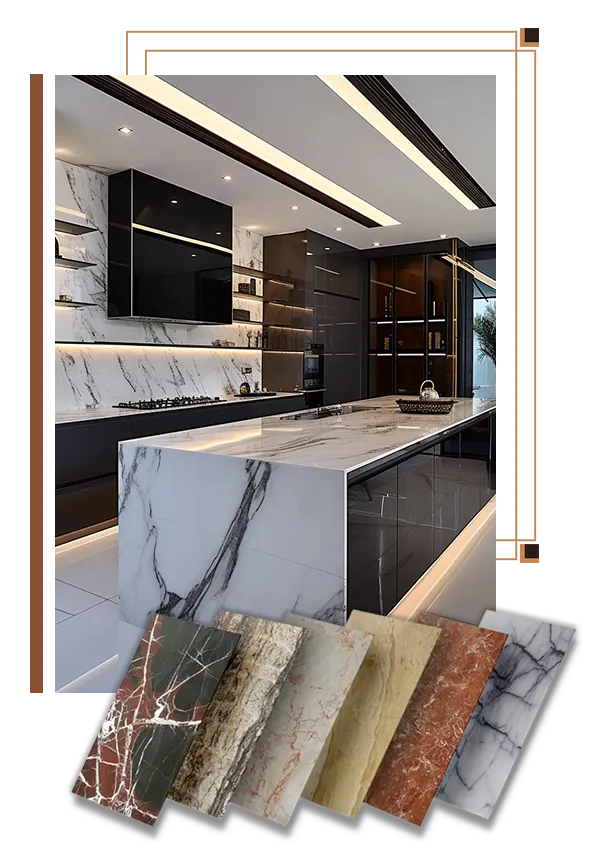
What Red Granite Is Actually Good For
The characteristics of granite make it ideal for use in high traffic areas. Granite is among the hardest types of natural stone. In addition to being very hard, it is extremely scratch-resistant compared to other materials. Granite does not experience stresses due to changes in temperature. If it is well maintained and sealed, it is fairly stain-resistant.
In high-traffic applications such as hotel lobbies and commercial buildings, red granite makes a good flooring material that does not need much maintenance compared to light-coloured stones. This is because the deep color of granite hides any slight scratches or inconsistencies of the stone surface. A hotel lobby or commercial building entrance that receives thousands of footprints each day is an example of high-traffic areas.
Countertops benefit from the same durability properties. The concern about heat resistance that sometimes comes up is real but manageable. Direct contact with very hot pans can potentially stress the surface in extreme cases. Trivets cost very little and solve the problem entirely.
Wall cladding and exterior applications are where red granite’s weather resistance becomes the relevant property. Unlike marble, which is susceptible to acid rain and atmospheric pollution over time, granite’s silicate composition is considerably more resistant to these environmental factors. A red granite facade ages differently from a marble one. Less dissolution, better colour retention over decades of exposure.
Why Slab Selection Requires More Attention Than Most Buyers Give It
The natural variation in granite is part of what makes it beautiful and part of what makes specifying it for large projects genuinely demanding.
Two slabs from the same quarry can look meaningfully different. The mineral distribution in the rock varies with the geological conditions at that specific point in the quarry block. A slab with a tight, uniform grain pattern looks different from one with larger mineral crystals even if both are cut from the same general deposit. For a kitchen countertop, this variation is character. For a large floor installation where forty slabs need to read as a coherent surface, it is a management challenge.
An experienced Red Granite Manufacturer in India who works with large project orders understands this and manages slab selection accordingly. Reserving material from the same quarry block where possible. Allowing buyers to review actual slabs before committing to quantities rather than selecting from samples that may not represent the variation range of the available stock. These are operational practices that determine whether a large installation looks intentional or assembled from whatever was available.
Processing Quality Is Where the Difference Shows
The same stone processed to different standards produces meaningfully different results in installation. Dimensional accuracy across a batch of tiles or slabs determines whether joints are consistent or vary visibly. Polishing quality determines how deeply and evenly the stone’s colour is revealed. Edge finishing on countertop pieces determines how clean the visible perimeter looks once the stone is in place.
A manufacturer with modern cutting and calibration equipment, proper polishing systems, and dimensional inspection at each stage produces material where the specification is actually met rather than approximately achieved.
For a buyer specifying large quantities for a significant project, this consistency is not a premium feature. It is what makes the installation achievable within reasonable time and effort.
International Sourcing Considerations
India is a major global source of natural granite and the export infrastructure is well developed. For international buyers, the considerations that matter beyond the stone itself are protective packaging that handles the physical stresses of sea freight, documentation that satisfies the importing country’s requirements, and a supplier who communicates reliably throughout the shipping process rather than disappearing between payment and delivery.
Red granite slabs are heavy. They are also fragile along their edges and corners in ways that internal structural strength does not protect. Packaging that has been designed through actual export experience, rather than through cost minimisation, delivers material in substantially better condition than inadequate packaging that saves money on paper and costs it in damaged product.
“Gopal Grani Marmo Pvt. Ltd. is a specialized Red Granite Manufacturer in India. As a prominent company, we are occupied in manufacturing and supplying a wide assortment of Red Granite. “
FAQs
The combination of warm distinctive colour, genuine durability, and versatility across applications from countertops to exterior facades. It is a design choice that makes a visible statement while delivering practical performance.
High-traffic flooring, commercial and residential countertops, staircases, reception areas, wall cladding, and exterior architectural applications where weather resistance over decades matters.
Because natural stone varies between slabs in ways that small samples do not reveal. Selecting from actual slabs for large installations prevents the colour and pattern inconsistency that makes an installation look assembled rather than designed.
Processing precision across calibration, polishing, and edge finishing. Slab stock management for large project supply. Quality inspection at each stage. And export packaging capability for international orders.
Less than most light-coloured stones. Periodic sealing, appropriate cleaning products, and sensible use practices maintain the surface. The depth of colour and the stone’s hardness mean minor wear is far less visible than on softer or lighter alternatives.
Need Expert Advice?
Our granite specialists are ready to help you pick the right stone for your project.
- Contact Us